A spoken ad has its own workflow
A promotional voice-over with music is different from a sung advertising jingle. This page prioritizes intelligible copy and one clear call to action rather than routing every request to music generation.
Turn one clear offer into a spoken audio ad. Prepare the message, check names and numbers, then review the voice and background before using the result.
Describe your idea in the agent, or upload your own voice recording to start a mix.
Sign in to save a private project. Audio editing tools work without an account.
Upload audio you have the right to use. Generated voices are AI-synthesized.

Tell the agent the business name, audience, offer and one action listeners should take. Provide exact prices, dates, locations and qualifying conditions. If those details are not settled, ask for a script draft first.
Check that the words are accurate and practical to say aloud. Specify pronunciation for a business name or address. Review the production summary and its configured cost before confirming a spoken recording.

Play the result from beginning to end, including every condition and the final instruction. Adjust the background or tail without replacing a good take. Download the WAV and check it against the intended publisher’s requirements.
A promotional voice-over with music is different from a sung advertising jingle. This page prioritizes intelligible copy and one clear call to action rather than routing every request to music generation.
Your script, pronunciation and delivery instructions are part of the saved project. Review the quote as a final checkpoint before those words become an audio recording.
A quieter bed can make an offer easier to understand. A mix-only revision uses the existing voice recording, so changing music volume does not silently change the price or pronunciation spoken in the ad.
Keep alternate treatments in your account, compare them and download the selected file. A project is not automatically published as a case study or added to a public examples page.

A radio ad script has limited space. Choose one useful message and provide the facts behind it. An opening event might need a business name, the event date and a location. A discount may need a price, an end date and a condition. Supply those details explicitly. The agent can help arrange the wording, but it should not invent scarcity, testimonials, awards or an offer that your business has not approved.
Read the draft aloud before producing it. Written addresses and product codes can be difficult to understand when spoken quickly. Simplify a call to action where possible, while preserving the information your audience needs. If the script needs specialist or regulated disclosures, have the appropriate person review it. This tool does not provide advertising compliance clearance or purchase broadcast airtime.
Read the offer as if the listener cannot pause, zoom in or look at a written footnote. Put the business name and main benefit in a form that works by ear. If the message depends on several conditions, decide which details must be spoken and which can be explained at the destination you name. A clear ad brief includes the actual offer, intended audience and a single next step. It should not ask the agent to invent discounts, claims or availability on behalf of the business.

Choose a voice delivery suited to the offer: conversational for a local service, clear and direct for an announcement, or energetic without rushing a date or number. Put pronunciation notes alongside the brand name instead of changing the written offer to make it look phonetic. The source recording should be understandable before a background is added.
Add a bed at a low starting level and listen to the important nouns, numbers and final instruction. The mixer protects the output peak and can change the bed, voice level, leading space, tail and added echo. It does not prove that the spot meets a station’s loudness specification. Always audition the exported file in the context where it will actually play.
Keep a record of the approved script alongside the chosen recording. When an offer changes, compare the new wording with that script before ordering another take. A minor background adjustment should not become an accidental change in a price, date or telephone number. After a new voice version is ready, listen specifically for the changed detail and then listen to the whole ad once more. This separates factual checking from judging the music, which makes it less likely that an attractive sound distracts you from an incorrect offer.
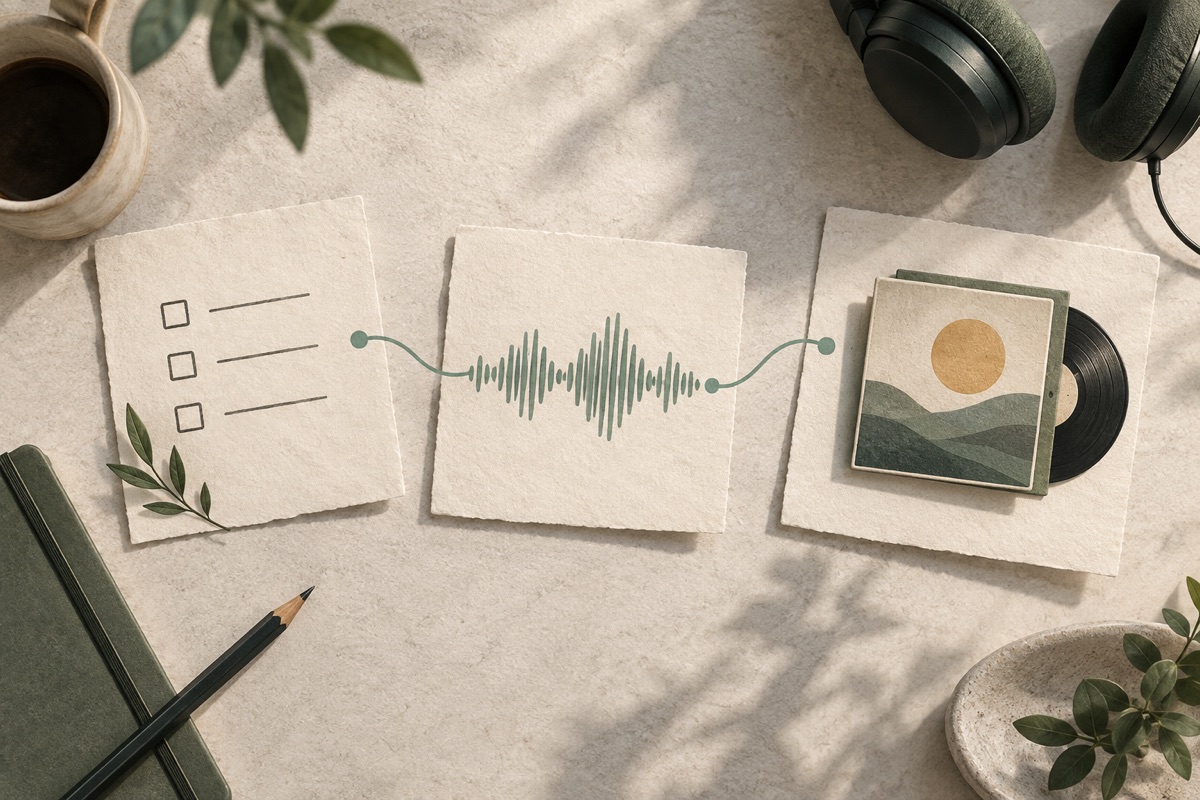
A fresh offer, date or spoken address needs a new vocal take. Reusing an old recording while changing only its title will not update the words in the sound. Tell the agent exactly which facts changed and review a speech quote. Keep the previous version until the new recording has been checked from start to finish.
If the words are already approved, use the dry voice to create another treatment. A quieter bed or shorter outro can improve the spot without generating new speech. Download the WAV you approved and keep a record of its intended use. The project links source and derived versions, but it does not distribute the ad, measure campaign reach or guarantee an improvement in sales.

Create a spoken candidate from a verified event brief. Check the date, location and pronunciation before production, then test whether a listener can understand the next step without seeing a screen.
Compare a restrained mix with a more energetic bed using the same approved voice. Keep revisions organized by project and avoid changing claims simply to create a different-sounding version.
Bring approved sponsor wording and your own host recording. Mix it with a suitable bed and export a file for the episode editor. Disclosures and sponsor approval remain part of your publishing process.
No. It prepares a spoken audio candidate and supports editing and export. Media buying, station schedules, campaign targeting and distribution are separate activities. Ask the publisher for the required duration, loudness and file specifications before delivering the final spot.
You can give the agent a fifteen-second target, but reading speed and script length affect the recording. The output shows measured seconds. If the copy does not fit naturally, shorten it rather than simply cutting off a condition or call to action. Verify the final duration in the exported file.
It can help organize the facts you provide, but it cannot certify a price, discount, qualification or legal claim. Review the script against your approved materials. Do not publish a spoken claim just because it appeared in an automatically drafted line.
A radio ad communicates through speech, optionally mixed over a bed. Commercial Jingles uses a musical generation route to sing a brand line. Choose based on the delivery you need. A spoken voice over music should not be described as an original sung hook.
Changing spoken content requires a new recording and a new speech quote. The mixer cannot replace a number while guaranteeing every other sample remains identical. If you only need the same offer with a quieter background, reuse the existing dry voice in a mix-only revision.
Review the applicable generation service terms, the rights to uploaded recordings and the business’s permission to use its names and claims. The site does not promise exclusivity, blanket commercial clearance or protection from every rights complaint. The License page explains the source categories to check.
You can prepare different wording or treatments, but define the purpose of each version before producing it. One might explain a local offer while another gives returning customers a short reminder. A new spoken message needs a new take; a different background level can reuse an existing recording. Review each quote and label the exports so old offers are not reused by mistake. UEG does not automatically run an advertising experiment or report which version sells more. Compare real campaign results separately rather than treating a preferred preview as proof of better performance.
Write it in the form you want a listener to hear, and add a reading instruction where needed. Group digits into understandable chunks and make clear whether letters should be spelled out. Long addresses are hard to retain from one listen, so consider a short spoken destination that your business genuinely controls. Do not invent a shorter domain just for the ad. After production, listen without looking at the script and check that you can repeat the contact information accurately. A visually correct line can still be spoken in an unexpected way.
The sound file may fit that role if the wording, permissions and publishing requirements are appropriate. Rewrite references to the station, host or listening context rather than assuming one message works everywhere. A podcast sponsor read may need a different introduction or disclosure from a standalone radio spot. UEG helps prepare the audio, but it does not negotiate sponsorships, provide a disclosure policy or insert the file into an episode. Review the finished message with the person publishing it and keep the approved version clearly identified.
Start by identifying the one message and one action the listener must remember. Remove repeated adjectives, a second offer or information that can be explained at the destination. Read the shorter script naturally before asking for a new take. Cutting a finished file is useful for silence or an unnecessary tail, but it cannot safely remove a spoken condition from the middle of a sentence. The tool reports actual duration after production; use that measurement to judge the fit and leave any required final delivery checks to your publishing workflow.
Start with a short brief or a recording you own. Review the production quote, then listen and refine.